When & Where to See the Northern Lights in Canada
 Photo Credit: James MacKenzie
Very few countries offer better conditions for viewing the Northern Lights than Canada! The northern regions in particular experience frequent, bright displays throughout the darker months.
The Northern Lights in Canada appear between late August and late March, with the peak season being November to February. At this time, vast stretches of wilderness become the stage for one of nature’s most extraordinary shows.
In this guide, we explain when and where it is best to see the Northern Lights in Canada, how the experience changes throughout the season and how Magnetic North Travel can take you there.
When Is the Best Time to See the Northern Lights in Canada?
The best time to see the Northern Lights in Canada is between November and February, but it’s not the only time worth considering!
September and October bring darkness back to the Yukon while the landscapes are still autumnal and daytime temperatures are gentler. March offers more daylight for outdoor activities, with enough darkness remaining for aurora viewing.

What Months Can You See the Northern Lights in Canada?
Viewing conditions change considerably throughout the year, so the experience can look very different depending on when you travel.
| Month | Can you see the Northern Lights in Canada? | What to expect |
| January | Yes | One of the strongest months for aurora viewing, with long, dark nights and cold, clear skies in northern Canada. |
| February | Yes | Another excellent month, especially in the Yukon and Northwest Territories. Good for combining aurora viewing with winter activities. |
| March | Yes | A strong shoulder-season month, especially in
Churchill, Manitoba. Nights are still dark, with slightly milder conditions than mid-winter. |
| April | Sometimes | Aurora activity can still occur, but shorter nights and changing weather make sightings less reliable. |
| May | Unlikely | Long daylight hours make the Northern Lights difficult to see, especially in northern regions. |
| June | Very unlikely | Around midsummer, much of northern Canada has very limited darkness, making aurora viewing poor. |
| July | Very unlikely | Nights are generally too light for dependable Northern Lights viewing. |
| August | Possible late in the month | Dark skies begin to return in late August, particularly in northern Canada. This can be a good early-season option. |
| September | Yes | A good shoulder-season month with darkening skies, milder temperatures and autumn landscapes. |
| October | Yes | A strong autumn option, particularly in the first half of the month, where aurora viewing can pair with wildlife experiences |
| November | Yes | The start of the core winter season, with longer nights and increasingly reliable conditions. |
| December | Yes | One of the peak months, with deep winter darkness and excellent aurora potential in the north. |
Why Canada Is One of the Best Places to See the Northern Lights
Canada has a real head start when it comes to the Northern Lights. Its northern regions sit in the right place, its wilderness areas are wonderfully dark, and its long winter nights create the kind of conditions aurora watchers dream about.
Canada Sits Beneath the Auroral Oval
The Northern Lights appear when charged particles from the sun collide with gases in Earth’s atmosphere, producing visible light near the magnetic poles. The most active region for these displays is called the auroral oval, a ring-shaped zone encircling the geomagnetic North Pole where auroras occur most frequently.
Canada lies directly beneath this oval, which means large parts of the country sit within the area of highest auroral activity. This gives Canada a natural advantage over destinations further south.
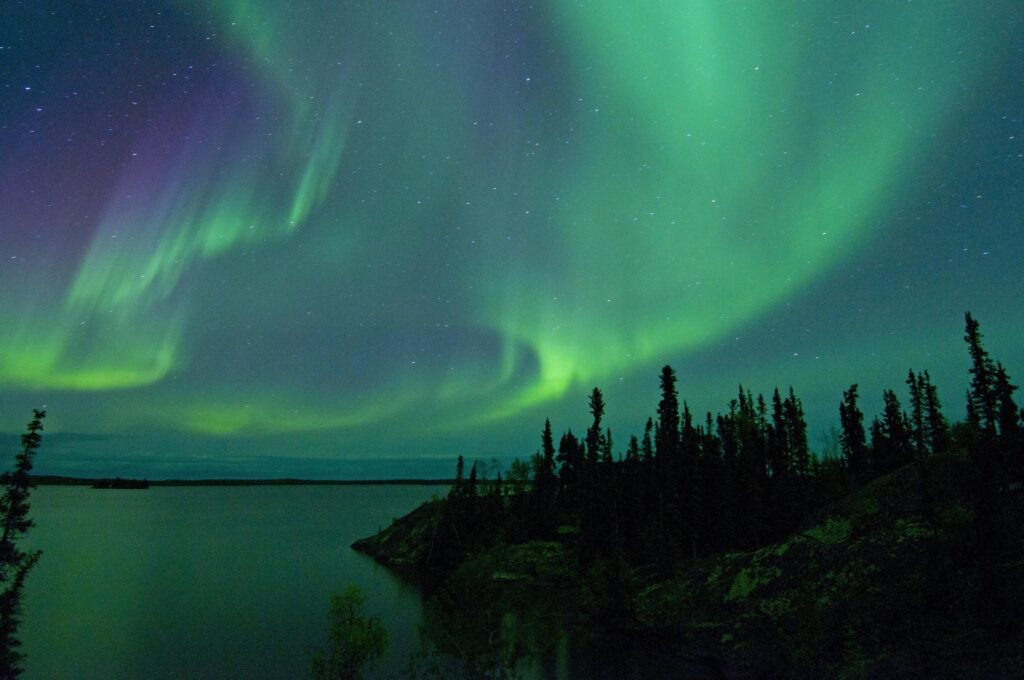
This positioning means that travellers in northern Canada, particularly in the Yukon, Northwest Territories, and Nunavut, don’t have to wait for rare conditions to see the Northern Lights. On clear, dark nights between late autumn and early spring, auroras are visible here on a regular basis, often several times per week and sometimes even nightly.
Low Light Pollution
Much of northern Canada remains wild and sparsely populated. The absence of large cities means minimal artificial light, creating ideal conditions for aurora viewing. Visitors often enjoy wide, uninterrupted horizons where the night sky remains completely dark.
Clear, Cold Winters
Winter in northern Canada brings long nights and dry, cold air. With less moisture in the atmosphere, the skies are clearer, making the Northern Lights easier to see. The combination of darkness, cold air, and high auroral activity produces some of the world’s most dependable viewing conditions.
Frequent Displays
Above latitude 60°N, auroras are visible on most clear nights during the season. Yellowknife proudly boasts of 300+ nights of visibility per year, under the right conditions.
Where Is the Best Place to See the Northern Lights in Canada?
The best place to see the Northern Lights in Canada depends on the kind of trip you want. Some travellers want a cosy wilderness lodge and nothing but dark skies. Others want wildlife, culture, winter activities or a little city time before heading north.
Whitehorse and the Yukon
Whitehorse is a brilliant base for seeing the Northern Lights in Canada. It is easy to reach by air, but surrounded by vast Yukon wilderness, so you do not have to travel far to find dark skies.
Best time to visit: Late August to March, with strong conditions from November to February. September and the first half of October can also be excellent for autumn landscapes and early-season aurora viewing.
Who it suits: Travellers who like the idea of combining aurora viewing with scenic drives, lodge stays, wildlife, local culture and outdoor activities.
Why we recommend it: The Yukon offers a wonderful balance of wild landscapes and well-planned travel. It is remote enough to feel adventurous, but accessible enough for a smooth, comfortable holiday.
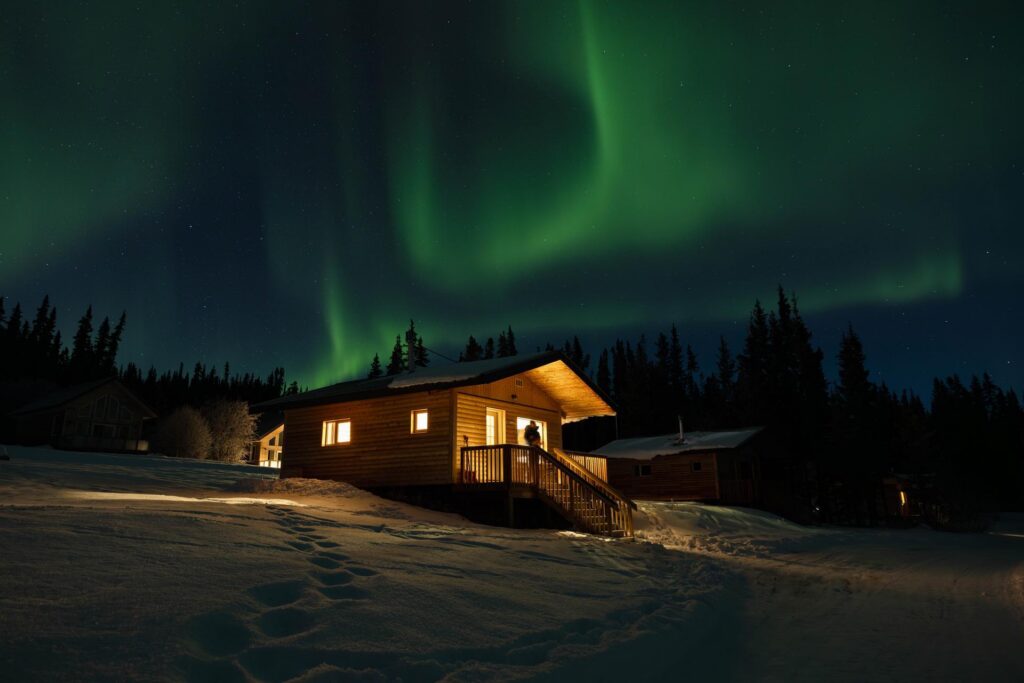
Yellowknife, Northwest Territories
Yellowknife is one of the most famous Northern Lights destinations in the world, and for good reason. Set in the Northwest Territories, it sits beneath the Auroral Oval and offers dark skies, open landscapes and specialist aurora lodges designed around night-sky viewing.
Best time to visit: November to March for winter aurora trips, with late summer and early autumn also offering possibilities once dark nights return.
Who it suits: Travellers who want to maximise their chances and stay somewhere designed around aurora viewing.
Why we recommend it: The region’s combination of frequent aurora activity, remote lodges and expert local operators makes it one of Canada’s most compelling Northern Lights destinations.
Churchill, Manitoba
Churchill is best known for polar bears, beluga whales and wide-open tundra, but it also offers the chance to see the Northern Lights. When the skies light up above this remote northern landscape, it can feel very special indeed.
Best time to visit: Late August to October for wildlife-focused autumn departures where aurora sightings may be possible. For stronger dedicated aurora viewing, February to March is generally the better window.
Who it suits: Wildlife lovers and travellers who want more than a single-focus aurora trip. Churchill is a rare place where you can combine dramatic landscapes, extraordinary wildlife and the possibility of Northern Lights.
Why we recommend it: Churchill offers one of Canada’s most distinctive travel experiences. For many visitors, the possibility of seeing auroras above the tundra adds another layer to an already remarkable journey.

Jasper National Park, Alberta
Jasper National Park is an official Dark-Sky Preserve and one of the best places in the Canadian Rockies for stargazing. It is not as far north as the Yukon or Northwest Territories, so it is not as reliable for aurora viewing, but the Northern Lights can occasionally be seen here when conditions are right.
Best time to visit: Autumn to early spring, when nights are longer and skies are darker.
Who it suits: Travellers who want mountain scenery, stargazing and the possibility of aurora sightings as part of a wider Canada holiday.
Why we recommend it: Jasper is better for travellers who want a varied Canadian Rockies experience than for those focused solely on the Northern Lights. It can be a beautiful addition to a tailor-made Canada itinerary, but the far north remains stronger for aurora reliability.
How Often Can You See the Northern Lights in Canada?
Destinations beneath or close to the Auroral Oval, such as Yellowknife and parts of the Yukon, offer some of Canada’s most regular aurora viewing. During the darker months, travellers who spend several nights in remote areas have a much better chance than those staying for just one night.

Plan Your Northern Lights Holiday to Canada
Magnetic North Travel offers several carefully planned Northern Lights holidays designed to make the most of Canada’s exceptional conditions.
- Canada’s Yukon and Vancouver Autumn Northern Lights: ideal for travellers looking for a mix of city living, wilderness and autumn aurora viewing.
- Blachford Lake Lodge Northern Lights Adventure: a remote lodge experience near Yellowknife in the Northwest Territories.
- Canada’s Big Five Safari: a wildlife-focused Manitoba adventure where aurora sightings are possible on autumn departures between late August and October.
Each itinerary combines comfortable accommodation with the chance to see the Northern Lights in Canada’s most scenic and unspoiled locations. Magnetic North can also tailor make any itinerary to meet your individual needs.
Speak to our travel specialists to start planning your tailor-made Northern Lights holiday to Canada.