Whale Watching in Norway: When and Where to Go
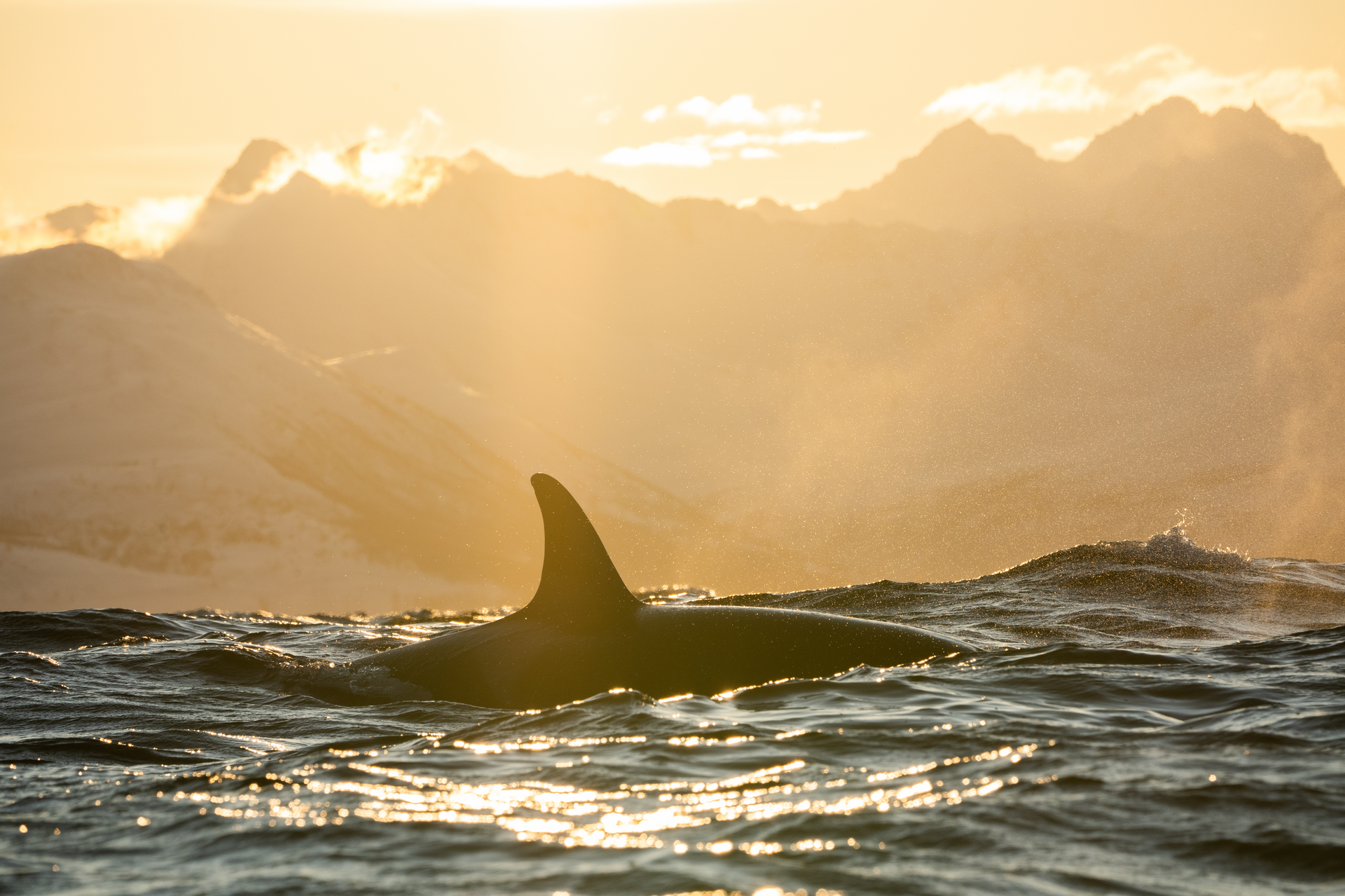 Photo Credit: Ismaele Tortella - Visit Norway
Imagine, standing on the deck of a boat as the misty blow of a humpback whale breaks the stillness of an icy fjord. One of those moments that will stay with you long after the adventure has finished.
So, is whale watching in Norway a good place to start? The short answer is a resounding yes. The Norwegian coastline boasts some of the highest concentration of whale sightings in Europe. However, these marine mammals migrate across vast stretches of ocean following herring shoals and deep-water currents. This means seeing whales in Norway is not simply a matter of turning up. Timing and location are everything.
Whether you hope to see orcas hunting or sperm whales diving into deep offshore trenches, planning your trip around these seasonal movements is key to creating this unforgettable moment, and a central highlight of tailor-made luxury Norway holidays.
Best Time to Go Whale Watching in Norway
Knowing the best time to see whales in Norway comes down to understanding what brings them to these coastal waters. This could be vast shoals of herring in the winter and nutrient-rich deep ocean trenches in the summer.
The Norwegian coastline offers two distinct seasons, each defined by different species and dramatic Arctic backdrops.
Winter Season (Mid-January to April)
Winter is the peak period for whale watching in Norway. During the midwinter, colossal schools of herring migrate into the sheltered fjords of Northern Norway.
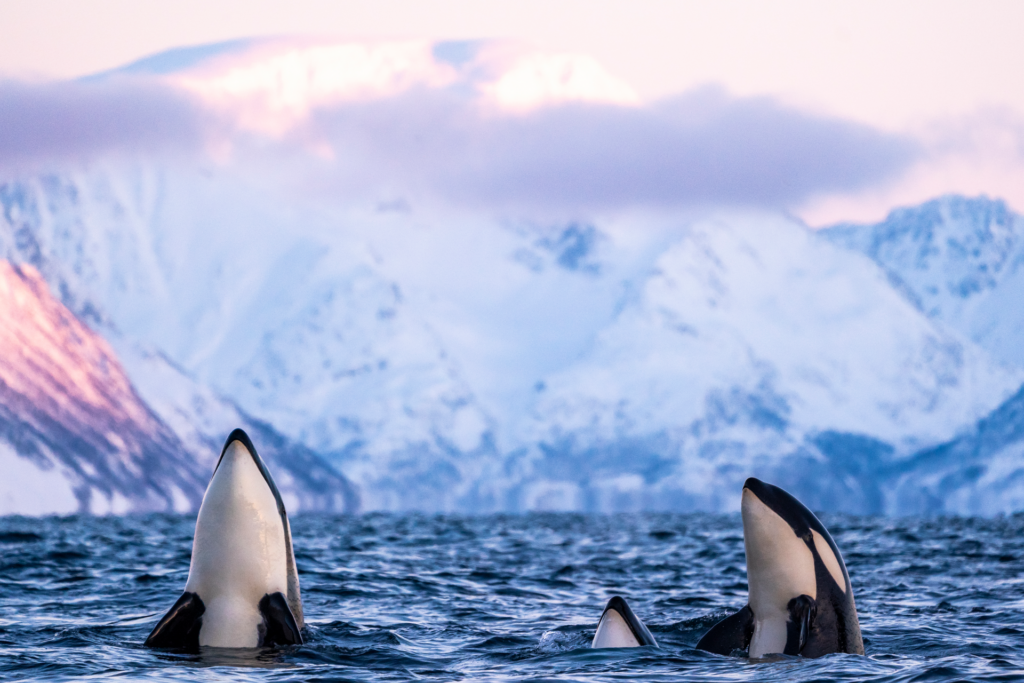
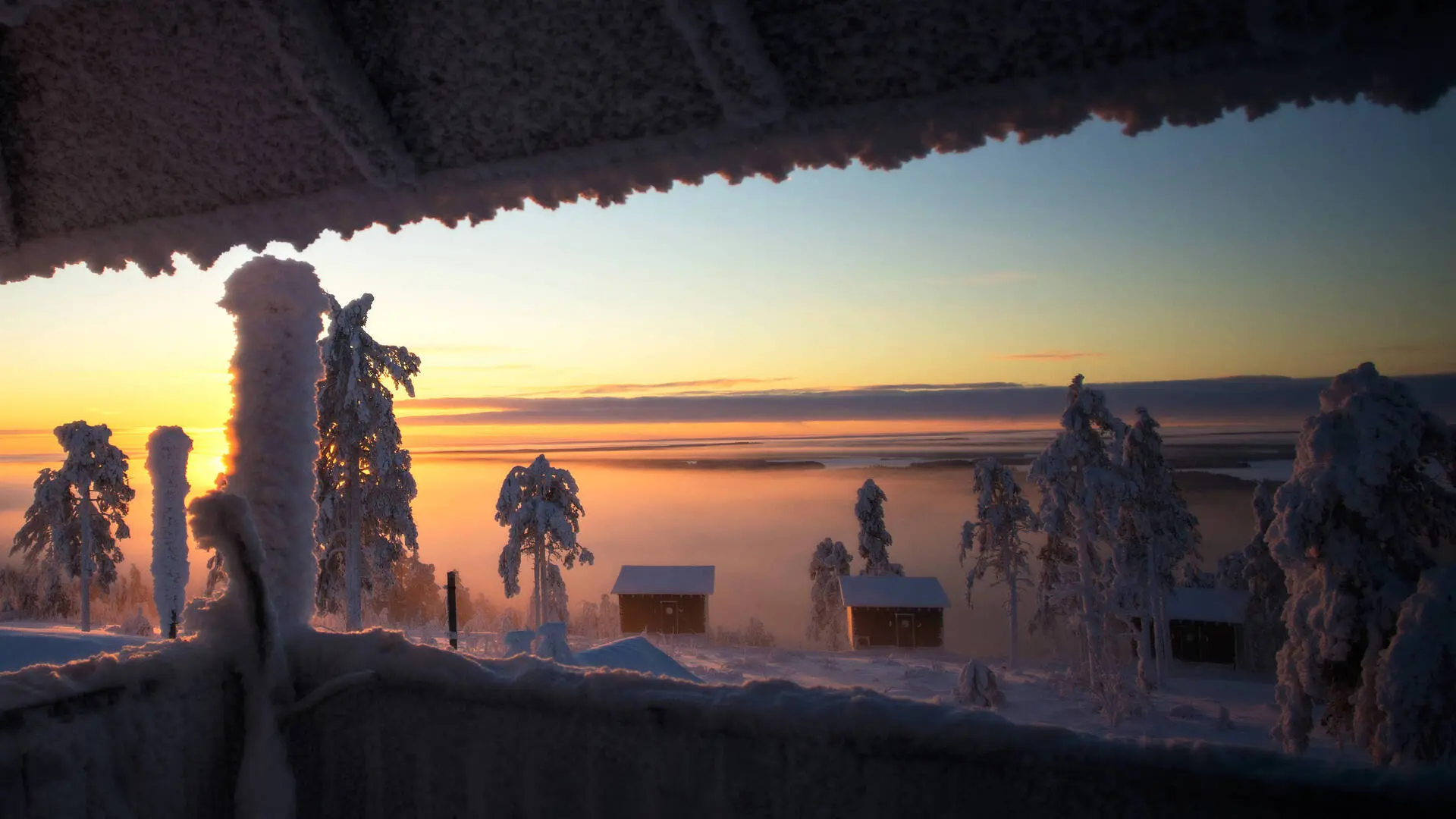
Following close behind are hundreds of humpback whales, orcas, and fin whales. As the winter progresses, this feeding frenzy moves through the fjords surrounding Tromsø, the Lyngen Alps, and out towards islands like Senja. The short daylight hours during the Polar Night create a pink twilight over the water, with the added thrill of hunting for the Northern Lights once evening falls.
Summer Season (May to early November)
While winter draws herring-seeking pods into the fjords, summer offers a completely different wildlife experience. The deep-water trench off Vesterålen, known as Bleik Canyon, stays rich with squid throughout the year, making it the prime habitat for giant sperm whales.
Summer also brings the Midnight Sun, providing 24-hour daylight for ocean excursions. Along with sperm whales, you have chances to spot sleeker minke whales, white-beaked dolphins, and occasionally blue whales in the far north (Svalbard).
What Species Can You Spot in Norway?
- Orcas (Killer Whales): Highly social and intelligent, orcas use complex group hunting strategies to feed on herring. You will primarily find them in the northern fjords from January.
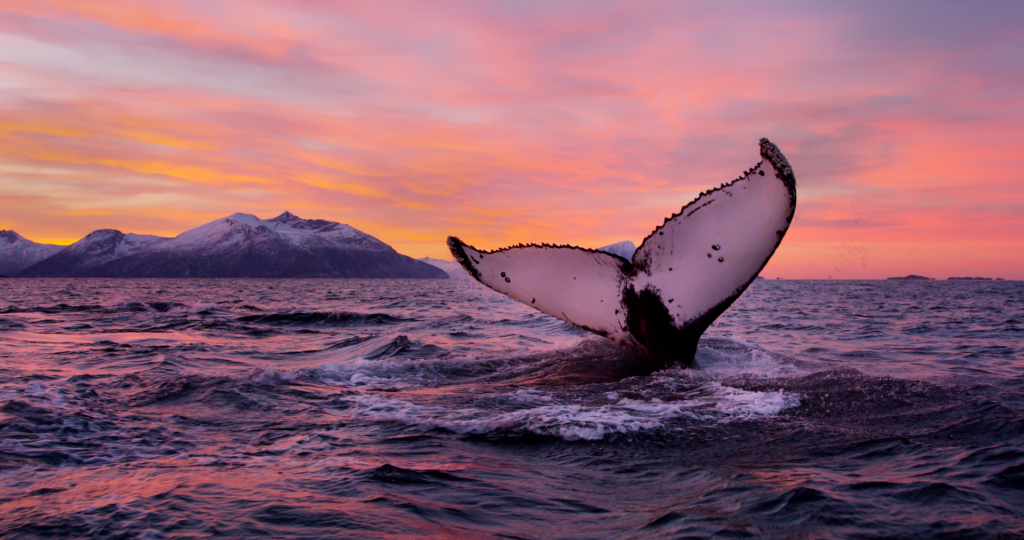
- Humpback Whales: Known for their acrobatic breaches and impressive tail flukes before a deep dive, humpbacks share the winter fjord feeding grounds with orcas.
- Sperm Whales: The ocean’s champion deep-divers, growing up to 20 metres long. These solitary giants favour the deep trench off Andenes in Vesterålen, where they dive down up to 2,000 metres to hunt, and be heard from 3-4 nautical miles away.
- Fin Whales: Fin whales, the second-largest animals on Earth, are regular visitors along the coast, feeding on plankton and small fish.
Where to See Whales in Norway: Key Locations & Itineraries
If you are deciding where to see whales in Norway, the northern fjords and coastal islands offer the most reliable waters. Depending on whether you prefer boutique fjord lodges, dramatic coastal island stays, or high-octane sea safaris, these distinct regions deliver world-class encounters.
The Lyngen Alps & Northern Fjords
Nestled east of Tromsø, the sheltered waters around the Lyngen Alps serve as a prime feeding bay during the early winter migration. The calm fjord waters provide fantastic conditions for observing humpback whales and orcas against a backdrop of dramatic, snow-capped peaks.
- On the Northern Lights and Whale Adventure in the Lyngen Alps, guests stay at the cosy Arctic Panorama Lodge. This trip combines quiet fjord cruises with storytelling, fireside relaxation, and prime viewing spots for the Aurora Borealis right from the lodge’s outdoor hot tub.
Senja Island
Often described as ‘Norway in miniature’, Senja offers steep mountain peaks rising directly out of the Atlantic Ocean. As the winter progresses into the early months of the year, vast schools of herring drift towards Senja’s outer fjords, drawing humpbacks and large pods of killer whales close to shore.
- The Northern Lights and Whale Watching Holiday on Senja Island takes you into the coastal fishing village of Mefjordvær. Based at Mefjord Brygge, this itinerary blends guided wildlife boat safaris with coastal snowshoeing, traditional local dining, and evening searches for the Northern Lights.
Tromsø & High-Adrenaline Fjord Excursions
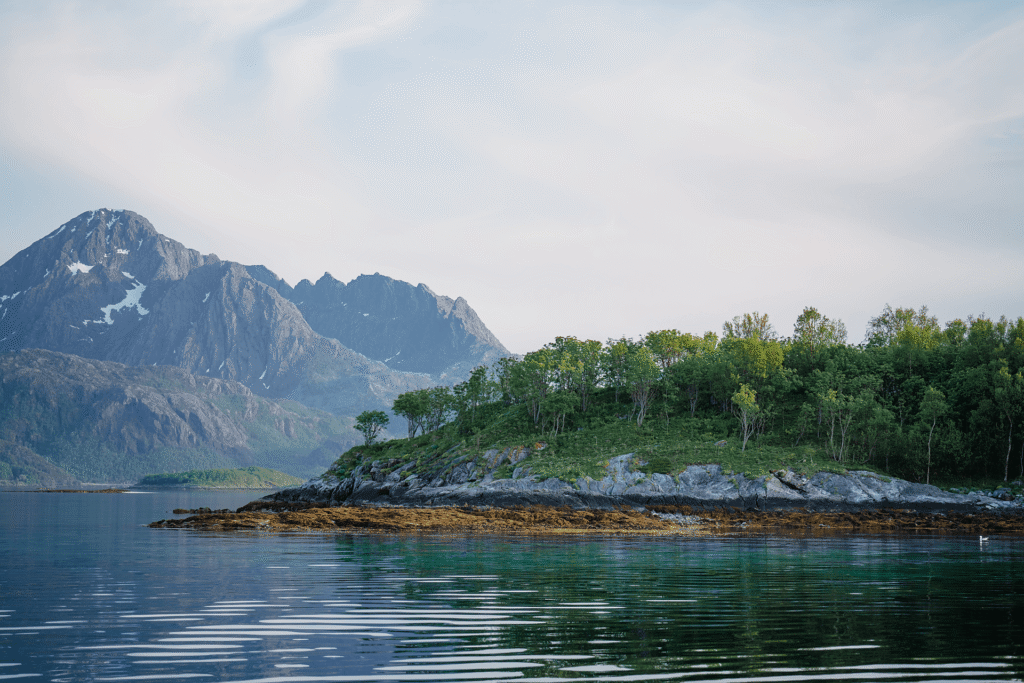
As the gateway to Arctic Norway, Tromsø acts as the main hub for marine safaris. For travellers seeking a faster-paced adventure on the water, rigid inflatable boats (RIBs) offer an exhilarating way to cover larger stretches of the fjords.
- Featured Tour: For those wanting a thrilling trip on the water combined with Arctic sightseeing, the Whales, Adrenaline and the Northern Lights itinerary delivers a dynamic blend of high-speed RIB boat safaris, fjord exploration, and lively city stays under the winter sky.
Practical Tips for Your Norwegian Whale Safari
To get the most out of your time on the water, a little preparation goes a long way. Spending hours on the water in Arctic conditions requires the right mindset and gear.
What to Wear
As the Norwegian saying goes, ‘there is no such thing as bad weather, only bad clothes.’ Even on mild summer days, ocean winds and spray lower the feel-like temperature quickly.
- Base Layer: Wear high-quality thermal underwear (merino wool is ideal) to wick away moisture and trap heat. Avoid cotton, as it absorbs dampness and chills the body quickly.
- Mid-Layer: A fleece, wool jumper, or lightweight down jacket provides insulation.
- Outer Layer: Windproof and waterproof trousers and jackets are crucial on open decks to shield against cold ocean spray.
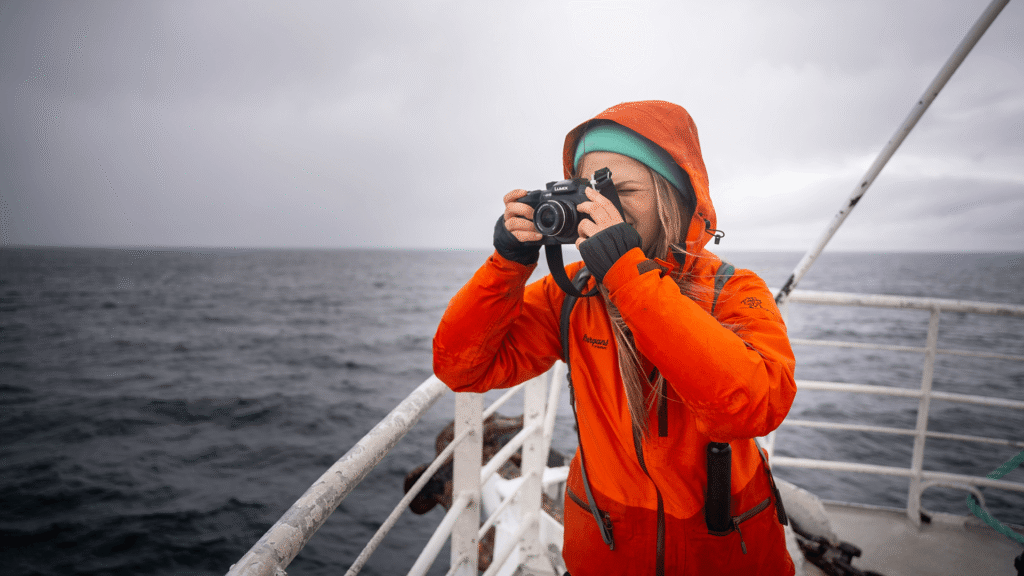
- Extremities & Footwear: Sturdy, insulated boots with good non-slip rubber soles are essential for wet decks. Bring a warm woollen hat, snood and windproof gloves. (Tip: Thin liner gloves worn inside mittens allows you to operate camera buttons without exposing bare skin to cold winds).
Choosing the Right Boat
Your choice of vessel depends on the type of experience you want:
- Hybrid-Electric Catamarans: These larger vessels feature warm indoor lounges with panoramic windows and spacious outdoor decks. Their electric propulsion engines allow them to approach wildlife in near-total silence, minimising stress on marine life while giving you a smooth, comfortable ride.
- Rigid Inflatable Boats (RIBs): RIB safaris put you right down at water level for an exhilarating, close-up view. Tour operators equip guests with heavy-duty thermal suit gear and flotation suits. RIBs are ideal for adventure-seekers looking for speed and unobstructed photography angles.
Ethical Wildlife Viewing in Norway
Norway enforces strict national codes of conduct to protect its marine populations:
- Reputable operators maintain respectful distances and never engine-steer directly into a pod’s path or cut off their direction of travel.
- Vessels limit their time near individual pods to avoid causing stress or altering natural feeding behaviours.
- Avoid making loud noises or using flash photography, and always choose operators that prioritise low-emission or quiet hybrid technology.
Planning a trip around seasonal migrations ensures that whale watching in Norway delivers one of the most rewarding wildlife encounters. Whether you choose the mid-winter polar lights of the northern fjords or the summer midnight sun off Vesterålen, matching your travel dates to the right coastal destination is the secret to an extraordinary journey.
Ready to see orcas and humpbacks in their natural habitat? Speak to our team of specialists today to start building your bespoke, hand-crafted itinerary for luxury Norway holidays.